Otoplasty
It sets prominent ears closer to the head and can reshape the ear folds.
- Type
- Surgery
- Area
- Ears
- Lasts
- Permanent in most people; ears can partly protrude again
- Prices
- €1,100–€6,979 published examples, Croatia, Turkey, Germany, United States
Before and after in the simulation
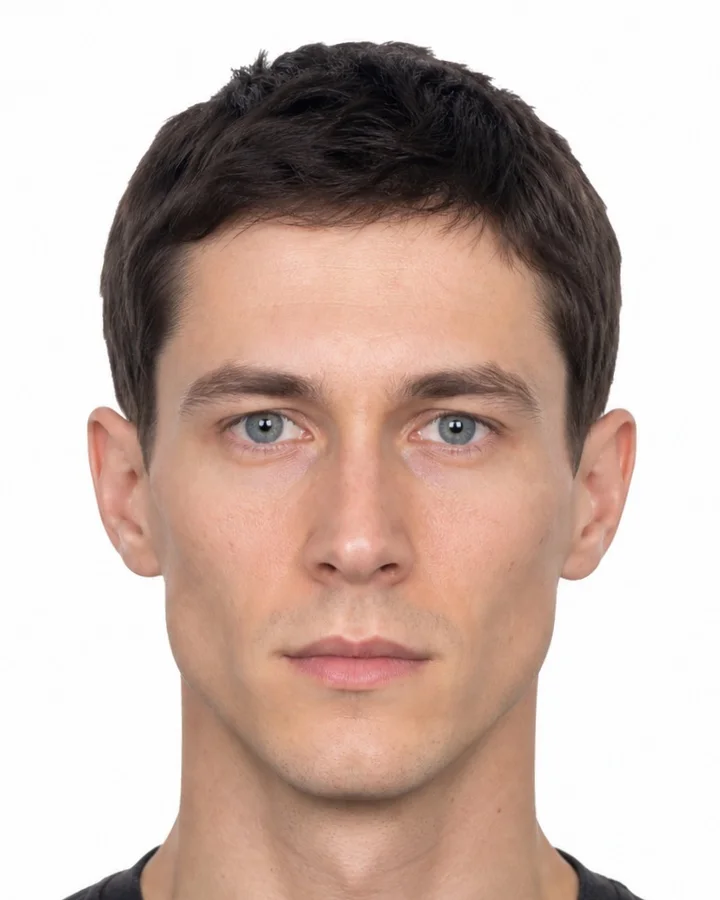 Before
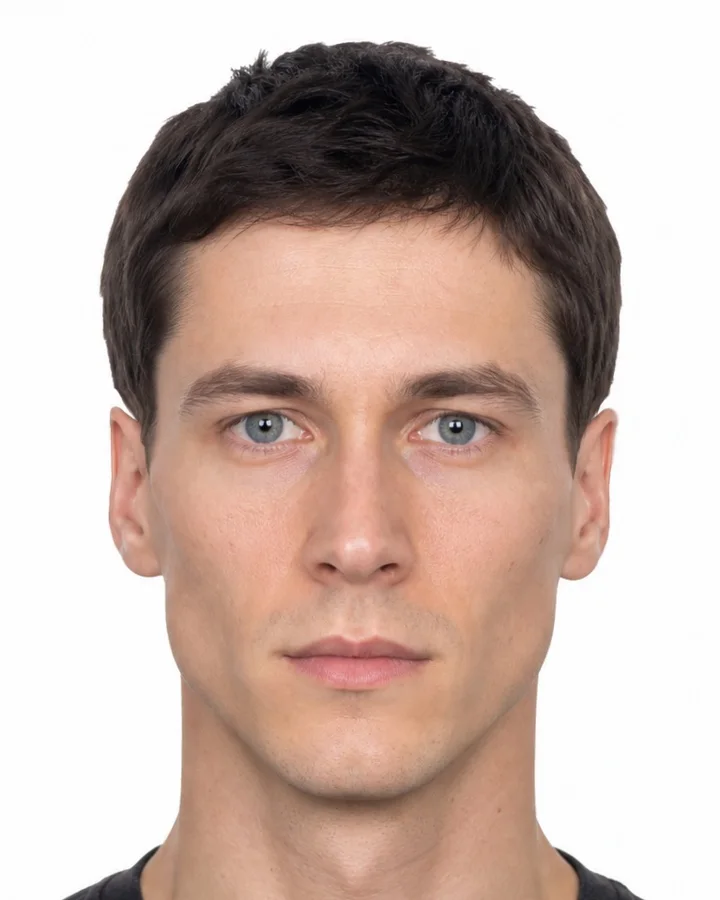 After
Made with Cephra’s own simulation on the reference face from the measurement guides, at the example strength the app starts this procedure with. Sets the ears closer to the head. It is an illustration of the shape change, not a prediction of anyone’s result.
Measurements it changes
Measured by the app on the same reference face, before and after the example above.
| Measurement | Before | After | Change |
|---|---|---|---|
| Ear Protrusion AngleFront view | 15.8° | 10.1° | -5.7° |
| Ear Protrusion RatioFront view | 14.9 % | 9.4 % | -5.5 % |
Values belong to the reference face and the example strength; on another face, or at another strength, the same procedure moves them by other amounts. A measurement describes a photo and is neither good nor bad on its own.
What it is
A small incision is made behind the ear, and the cartilage is reshaped and held closer to the head with permanent stitches, sometimes with removal of small pieces of cartilage. Adults usually have local anaesthetic (sometimes with sedation), and children usually have general anaesthesia.
Recovery and how long it lasts
The bandage and stitches come off after 5–10 days, a headband is worn at night for several weeks, most people return to work or school after 1–2 weeks, and contact sports usually resume after about 8 weeks.
How long it lasts: Permanent in most people; ears can partly protrude again.
Main risks
- Ears protruding again, sometimes needing further surgery
- Blood collection around the cartilage (hematoma)
- Infection of the cartilage (perichondritis)
- Asymmetry or overcorrection
- Numbness of the ear (usually temporary) and scarring
The main risks named in the sources below, not a complete list. A surgeon or doctor explains the risks that apply to you.
Limits of the preview
- The example is shown in the front view; the side view has no movement for this procedure in the simulation. It moves the photo’s shape only: swelling, scars, skin quality and how tissue settles over months are not part of the picture.
Published prices
Published examples range from €1,100 to €6,979 (5 published examples). These are prices that providers publish themselves, not a market average and not a quote.
- Poliklinika Dr. Džepina, Zagreb · published pricesCroatia · €1,100–€2,000 · checked 22 September 2026
Correction of prominent ears; confirm anesthesia, laterality and stay inclusions with the clinic.
- TPS Clinic, Istanbul · published pricesTurkey · €1,288 · checked 22 September 2026
Prominent-ear correction with local anesthesia. Published surgery price; extra hospital nights, specialist consultations and other listed extras may cost more. Travel costs are not assumed included.
- TPS Clinic, Istanbul · published pricesTurkey · €1,656 · checked 22 September 2026
Prominent-ear correction with general anesthesia. Published surgery price; extra hospital nights, specialist consultations and other listed extras may cost more. Travel costs are not assumed included.
- Nürnberger Klinik · published pricesGermany · from €4,000 · checked 22 September 2026
Ear pinning. Includes 19% VAT; anesthesia and additional compression garments may cost extra.
- Prime Facial Plastic Surgery, Maryland · published pricesUnited States · €5,234–€6,979 · original 6,000–8,000 USD · checked 22 September 2026
Otoplasty. Published total includes surgeon, anesthesia and facility fees when applicable; the anesthesia setting can affect the price. Personal quote and travel costs are separate. EUR amounts are rounded to whole euros using the ECB reference rate dated 2026-09-22; payment exchange rates and fees may differ.
Research
- A modified ear-pinning technique was linked to higher satisfactionMedicine (Baltimore) · 2021 · controlled study · Moderate evidence
In the modified group 90.1% were satisfied (60.5% completely); in the classic group roughly half were satisfied and 17 of 48 were dissatisfied. The difference was statistically significant.
- Ear pinning: scoring cartilage with a rasp or a needle gave similar resultsAesthetic Plast Surg · 2021 · randomised trial · Moderate evidence
Overall result, symmetry and shape of the ear fold did not differ between groups, and 95% of patients said they were satisfied. The needle method was linked to less swelling after surgery and a shorter operation.
- Two stitch-only ear-pinning methods in children gave similar resultsInt J Pediatr Otorhinolaryngol · 2015 · controlled study · Moderate evidence
No serious complications such as bleeding or infection occurred; stitches came through the skin in about 14–16% of ears. Ear-to-head distances and satisfaction did not differ between methods, and an independent surgeon rated about 93–95% of patients as improved.
- Head bandage after ear pinning: no clear benefitEar Nose Throat J · 2009 · controlled study · Moderate evidence
Complications occurred in 36% with a bandage and 26% without (no significant difference), and satisfaction scores were 6.56 and 8.46 (not significant). The type of operation, complications and the individual surgeon were linked to satisfaction.
- Pain relief after ear-pinning surgery: nerve block versus local injectionCan J Anaesth · 1996 · randomised trial · Moderate evidence
Pain relief lasted on average 8.6 hours with local injection and 10.5 hours with the nerve block (not significantly different). About a quarter needed no extra painkillers; nausea or vomiting affected 36 to 43%.
11 studies in the research library are linked to this procedure; the strongest are shown.
Sources
Patient information checked 1 October 2026. Figures vary between people and sources. This page is general information, not medical advice.
Measure your face – freeMeasured in your browser; your photos stay on your device. The simulation that shows a procedure on your own photo is part of the paid plans.