Chin filler
Increases chin projection and length, bringing a set-back chin forward in profile.
- Type
- Non-surgical treatment
- Area
- Lower jaw & chin
- Lasts
- Around 12 months in trials, sometimes longer depending on product; dissolvable with hyaluronidase
- Prices
- from €299 published examples, Germany
Before and after in the simulation
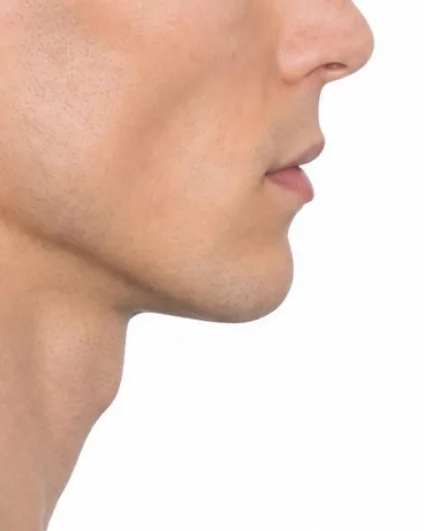 Before
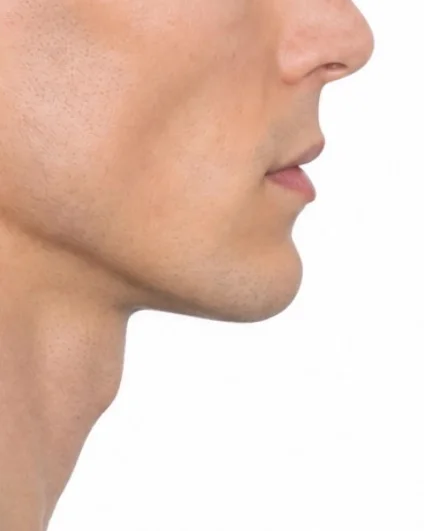 After
Made with Cephra’s own simulation on the reference face from the measurement guides, at the example strength the app starts this procedure with. Brings the chin slightly forward and widens it a little. It is an illustration of the shape change, not a prediction of anyone’s result.
Measurements it changes
Measured by the app on the same reference face, before and after the example above.
| Measurement | Before | After | Change |
|---|---|---|---|
| Mentolabial AngleSide view | 137.4° | 129.4° | -8.0° |
| Z AngleSide view | 72.5° | 76.2° | +3.7° |
| Mentolabial DepthSide view | 18.9 % | 22.4 % | +3.5 % |
| Facial Convexity (Glabella)Side view | 165.7° | 168.4° | +2.7° |
| Facial Convexity (Nasion)Side view | 161.3° | 164.0° | +2.7° |
| Chin Position Relative to Nasion VerticalSide view | -1.5 mm | 1.0 mm | +2.5 mm |
| Nasomental AngleSide view | 131.2° | 133.2° | +2.0° |
| Total Facial ConvexitySide view | 140.5° | 142.4° | +1.9° |
| Submental–Cervical AngleSide view | 109.2° | 107.4° | -1.8° |
| Nasofacial AngleSide view | 30.1° | 28.6° | -1.5° |
| Ramus-to-Mandible Length RatioSide view | 0.614 | 0.602 | -0.012 |
| Lower Lip S-Line PositionSide view | 0.0 mm | -1.0 mm | -1.0 mm |
| Measurement | Before | After | Change |
|---|---|---|---|
| Upper Lip E-Line Distance / Nasal LengthSide view | -0.086 | -0.110 | -0.024 |
| Lower Lip E-Line Distance / Nasal LengthSide view | -0.038 | -0.062 | -0.024 |
10 smaller changes are not listed. “Move along” means the value changes because a neighbouring point or the line it is measured against moves, not because the feature itself is treated. Values belong to the reference face and the example strength; on another face, or at another strength, the same procedure moves them by other amounts. A measurement describes a photo and is neither good nor bad on its own.
What it is
Hyaluronic acid filler is injected on or near the bone of the chin, typically with a lidocaine-containing product or numbing cream.
Recovery and how long it lasts
Tenderness, firmness and swelling are common and usually resolve within about a week.
How long it lasts: Around 12 months in trials, sometimes longer depending on product; dissolvable with hyaluronidase.
Main risks
- Tenderness, firmness and swelling
- Bruising
- Lumps or asymmetry
- Infection or inflammatory reaction (rare)
- Vascular occlusion (filler entering a blood vessel), which can rarely cause skin necrosis or vision loss
The main risks named in the sources below, not a complete list. A surgeon or doctor explains the risks that apply to you.
Limits of the preview
- The example is shown in the side view; the front view has no movement for this procedure in the simulation. It moves the photo’s shape only: swelling, scars, skin quality and how tissue settles over months are not part of the picture.
Published prices
Published examples start at €299 (one provider). These are prices that providers publish themselves, not a market average and not a quote.
- M1 Med Beauty · published pricesGermany · from €299 · checked 22 September 2026
Hyaluronic-acid chin augmentation/correction, per 1 ml; not a complete treatment-course price. Includes VAT; actual services are billed under the German GOÄ fee schedule.
Research
- Evidence for calcium hydroxylapatite filler in the faceInt J Dermatol · 2024 · systematic review · Strong evidence
Evidence supported use in cheeks, jawline, HIV-related facial fat loss and nasolabial folds; marionette lines, chin, pre-jowl area and mouth corners also tended to respond well. No randomised trials exist for the diluted versions used for skin tightening.
- Chin enlargement methods compared: implants, bone cuts, fillers, graftsPlast Reconstr Surg · 2023 · systematic review · Strong evidence
Implants (3,344 patients) and osteotomy (885) were most studied; overall complications were 15.7% for implants and 19.7% for osteotomy, including temporary lower-lip and chin nerve problems in 2.4% and 16.4%.
- Lumps and tissue reactions after face and neck fillersMed Oral Patol Oral Cir Bucal · 2023 · systematic review · Strong evidence
Lips (18%), nasolabial folds (13%), cheeks (13%) and chin (10%) were the most common sites; 87% of biopsies showed foreign-body granuloma; silicone and hyaluronic acid were the most common materials; 12 patients had prolonged problems.
- Two firm hyaluronic acid fillers compared for chin augmentationAesthet Surg J · 2026 · randomised trial · Moderate evidence
Total filler used was about 1.85 ml in both groups. One product used about 15% less at the chin tip and scored better for correcting the labiomental and nasomental angles. Safety and satisfaction did not differ.
- Another hyaluronic acid chin filler compared with no treatmentAesthetic Plast Surg · 2025 · randomised trial · Moderate evidence
Responder rates were 70% versus 0% at 6 months and 54.7% versus 0% at 12 months; side effects were mild to moderate.
16 studies in the research library are linked to this procedure; the strongest are shown.
Sources
- Dermatologic Surgery (2020) – Chin augmentation with VYC-20L
- U.S. FDA – Dermal Fillers (Soft Tissue Fillers)
- Cleveland Clinic – Dermal Fillers
Patient information checked 1 October 2026. Figures vary between people and sources. This page is general information, not medical advice.
Measure your face – freeMeasured in your browser; your photos stay on your device. The simulation that shows a procedure on your own photo is part of the paid plans.