Rhinoplasty
Changes the size and shape of the nose, such as the dorsal hump, tip shape, nostril width or overall proportion to the face, and can also improve breathing.
- Type
- Surgery
- Area
- Nose
- Lasts
- Long-lasting; the nose still changes gradually with ageing.
- Prices
- €2,500–€12,213 published examples, Croatia, Turkey, Germany, United States
Before and after in the simulation
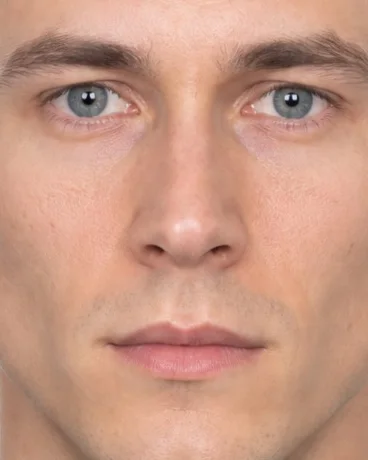 Before
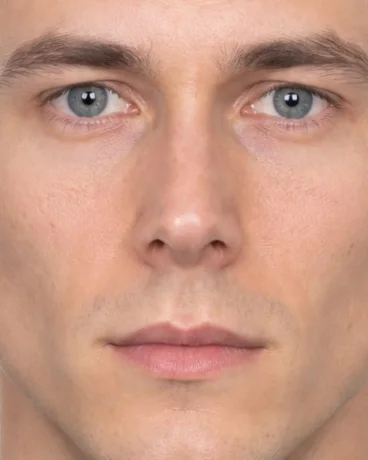 After
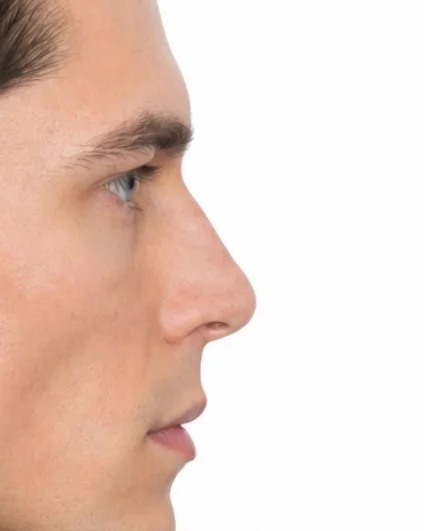 Before
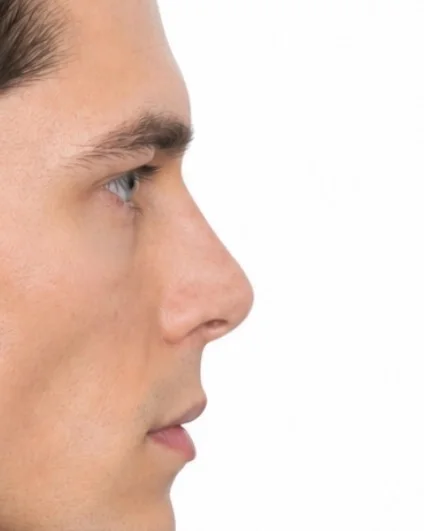 After
Made with Cephra’s own simulation on the reference face from the measurement guides, at the example strength the app starts this procedure with. Removes the dorsal hump, projects and rotates the tip slightly, narrows the alar base and shortens the nose a little. It is an illustration of the shape change, not a prediction of anyone’s result.
Measurements it changes
Measured by the app on the same reference face, before and after the example above.
| Measurement | Before | After | Change |
|---|---|---|---|
| Mouth-to-Nose Width RatioFront view | 1.325 | 1.421 | +0.096 |
| Nasal Underside Rotation AngleSide view | 17.7° | 25.4° | +7.7° |
| Nasolabial AngleSide view | 112.4° | 120.0° | +7.6° |
| Frankfort–Nasal Tip AngleSide view | 36.9° | 42.0° | +5.1° |
| Nasal Tip AngleSide view | 135.6° | 140.0° | +4.4° |
| Nasal Dorsal CurvatureSide view | -3.3 % | -5.9 % | -2.6 % |
| Alar WidthFront view | 34.9 mm | 32.5 mm | -2.4 mm |
| Nasal Base-to-Bridge Width RatioFront view | 2.49 | 2.32 | -0.17 |
| Total Facial ConvexitySide view | 140.5° | 141.7° | +1.2° |
| Nasomental AngleSide view | 131.2° | 132.3° | +1.1° |
| Nasal-to-Intercanthal Width RatioFront view | 1.17 | 1.10 | -0.07 |
| Nasofrontal AngleSide view | 135.9° | 135.3° | -0.6° |
| Measurement | Before | After | Change |
|---|---|---|---|
| Upper Lip E-Line Distance / Nasal LengthSide view | -0.086 | -0.074 | +0.012 |
| Lower Lip E-Line Distance / Nasal LengthSide view | -0.038 | -0.030 | +0.008 |
| Upper Lip E-Line PositionSide view | -3.6 mm | -3.0 mm | +0.6 mm |
| Upper Lip S-Line PositionSide view | -1.0 mm | -0.6 mm | +0.4 mm |
| Lower Lip E-Line PositionSide view | -1.6 mm | -1.2 mm | +0.4 mm |
| Lower Lip S-Line PositionSide view | 0.0 mm | 0.2 mm | +0.2 mm |
5 smaller changes are not listed. “Move along” means the value changes because a neighbouring point or the line it is measured against moves, not because the feature itself is treated. Values belong to the reference face and the example strength; on another face, or at another strength, the same procedure moves them by other amounts. A measurement describes a photo and is neither good nor bad on its own.
What it is
The nasal bones and cartilages are reduced, added to (with cartilage grafts) or rearranged through incisions inside the nostrils (closed) or with an added small incision across the columella (open). It is done under general anaesthesia or local anaesthesia with sedation, usually as an outpatient procedure.
Recovery and how long it lasts
A splint is typically worn for 1–2 weeks with return to work in about 1–2 weeks; most swelling resolves by about 3 months, and the final shape can take up to a year to settle.
How long it lasts: Long-lasting; the nose still changes gradually with ageing.
Main risks
- Breathing difficulty
- Unsatisfactory appearance or asymmetry, with a need for revision surgery
- Numbness or altered skin sensation
- Septal perforation (rare)
- Bleeding, infection or change in sense of smell
The main risks named in the sources below, not a complete list. A surgeon or doctor explains the risks that apply to you.
Limits of the preview
- The example is shown in the front view and the side view. It moves the photo’s shape only: swelling, scars, skin quality and how tissue settles over months are not part of the picture.
Published prices
Published examples range from €2,500 to €12,213 (4 published examples). These are prices that providers publish themselves, not a market average and not a quote.
- Poliklinika Dr. Džepina, Zagreb · published pricesCroatia · €2,500–€3,800 · checked 22 September 2026
Septorhinoplasty; this source includes septum correction. Confirm anesthesia, stay and other inclusions with the clinic.
- TPS Clinic, Istanbul · published pricesTurkey · €2,576 · checked 22 September 2026
Open or closed rhinoplasty. Published surgery price; extra hospital nights, specialist consultations and other listed extras may cost more. Travel costs are not assumed included.
- Nürnberger Klinik · published pricesGermany · from €4,500 · checked 22 September 2026
Rhinoplasty without fracture; the separate with-fracture starting price is EUR 6,500. Includes 19% VAT; anesthesia and additional compression garments may cost extra.
- Prime Facial Plastic Surgery, Maryland · published pricesUnited States · €9,596–€12,213 · original 11,000–14,000 USD · checked 22 September 2026
Rhinoplasty. Published total includes surgeon, anesthesia and facility fees when applicable; the anesthesia setting can affect the price. Personal quote and travel costs are separate. EUR amounts are rounded to whole euros using the ECB reference rate dated 2026-09-22; payment exchange rates and fees may differ.
Research
- How preferred nose shapes differ by culture, ethnicity and generationAesthet Surg J · 2026 · systematic review · Strong evidence
North American white respondents favoured a slightly scooped bridge with mild under-projection, while East Asian and Middle Eastern groups preferred a straight bridge with a more open nasolabial angle. Japanese studies reported preferred nasofacial angles of 30-33 degrees, and younger generations favoured longer, straighter noses with less upturn.
- Race and ethnicity in facial feminization surgeryJ Sex Med · 2025 · systematic review · Strong evidence
African American, Asian and Hispanic patients were less likely to have forehead (cranioplasty) or nose surgery. Measurement studies found ethnic differences in the nose-lip angle, chin size and jaw flare, and race was not a significant predictor of revisions or complications.
- Common bridge flaws in published preservation rhinoplasty photosAesthetic Plast Surg · 2023 · systematic review · Strong evidence
Ideal bridge lines on the front view were seen in 20.3% and an ideal profile in 25.4%, but no patient had both. The most common flaws were uneven bridge lines (78.0%), a bridge off the midline (54.2%) and a remaining hump (42.4%).
- Does timing after first period predict stable results of teen nose surgery?J Craniofac Surg · 2022 · systematic review · Strong evidence
Girls more than 2 years past their first period showed few changes over time, apart from more tip projection and a smaller nasolabial angle. Those closer to or before their first period showed decreases in face height, nasal tip angle and nasofrontal angle; one had a revision.
- Facial feminisation surgery: which areas are treated and how patients fareAnn Plast Surg · 2022 · systematic review · Strong evidence
About half of procedures addressed the upper face; forehead work made up 34.6%, nose 12.8% and chin 12.2%; studies with patient-reported measures showed high satisfaction.
57 studies in the research library are linked to this procedure; the strongest are shown.
Sources
Patient information checked 1 October 2026. Figures vary between people and sources. This page is general information, not medical advice.
Measure your face – freeMeasured in your browser; your photos stay on your device. The simulation that shows a procedure on your own photo is part of the paid plans.