Forehead lengthening / hairline raise
Changes the vertical height of the forehead: a forehead lift through the scalp can lengthen it, while hairline lowering shortens it.
- Type
- Surgery
- Area
- Forehead & hairline
- Lasts
- Long-term; hairline position after hairline lowering remained stable over follow-up in published series.
- Prices
- No specific published price found; a personal quote is needed.
Before and after in the simulation
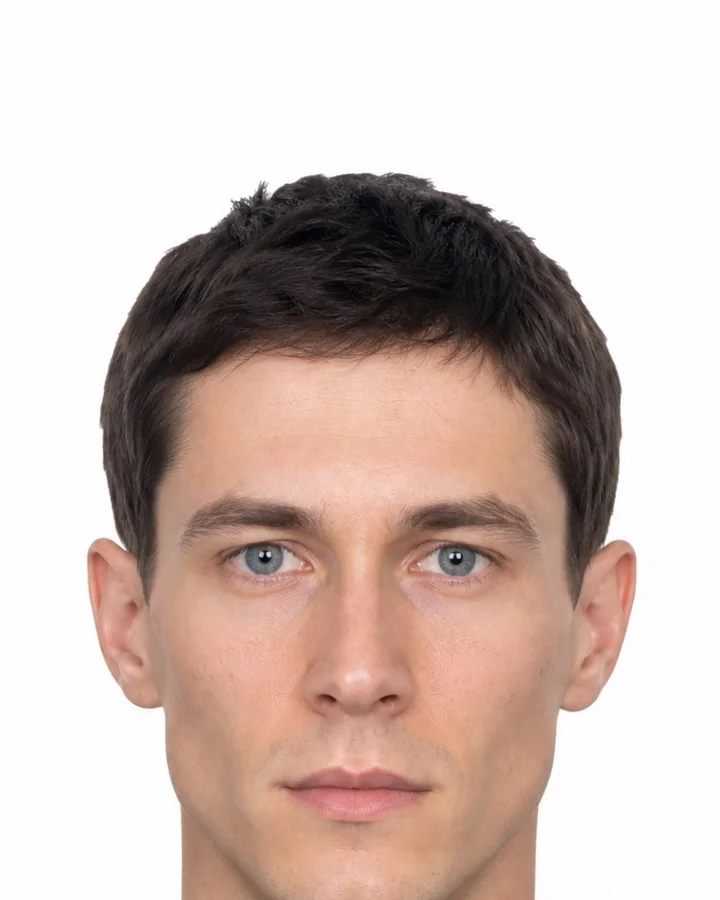 Before
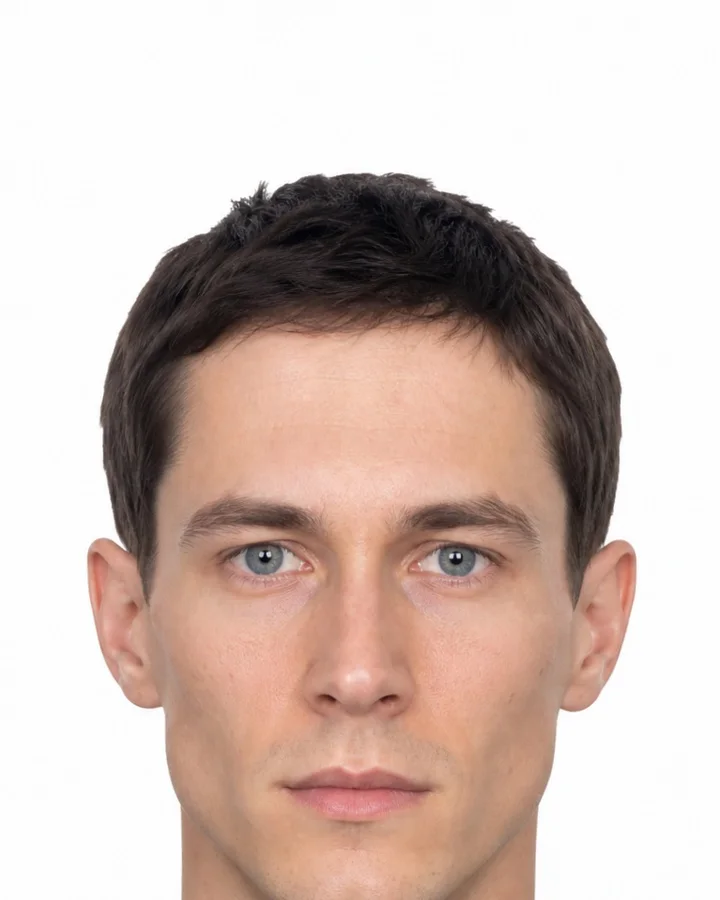 After
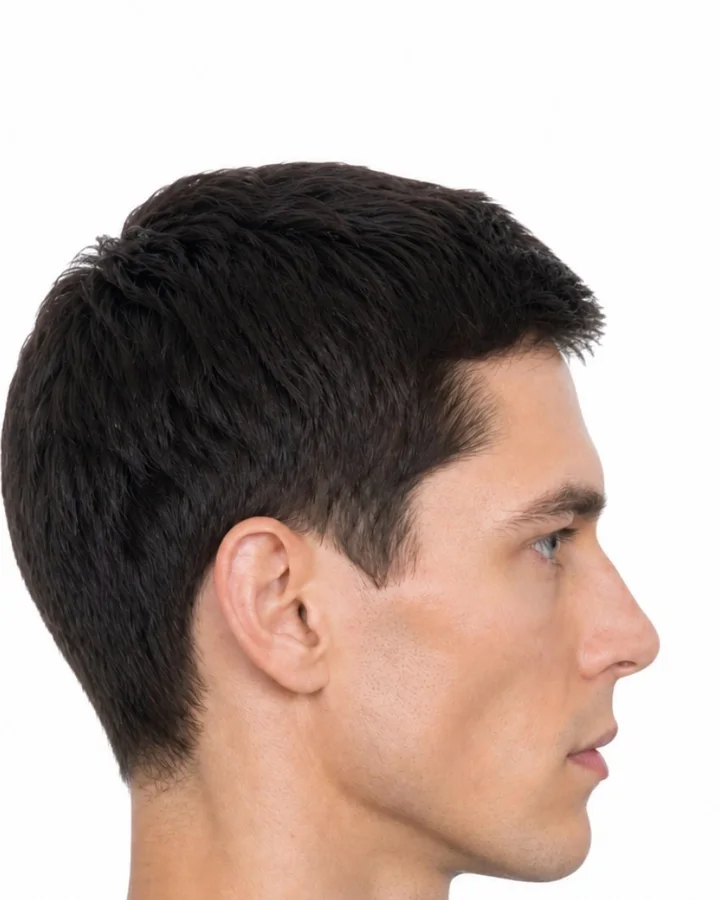 Before
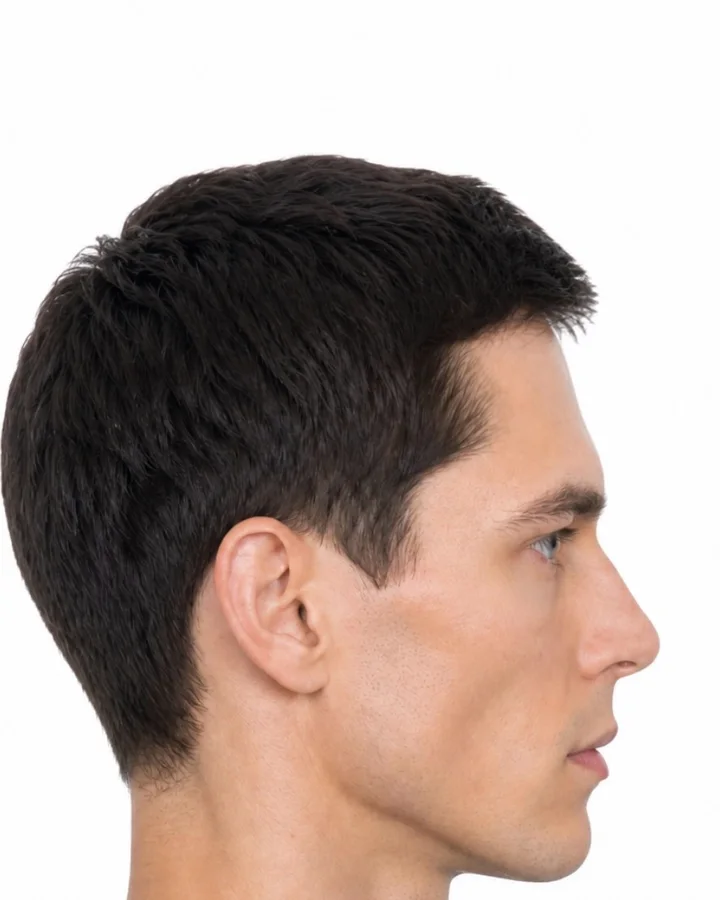 After
Made with Cephra’s own simulation on the reference face from the measurement guides, at the example strength the app starts this procedure with. Raises the hairline so the forehead appears taller. It is an illustration of the shape change, not a prediction of anyone’s result.
Measurements it changes
Measured by the app on the same reference face, before and after the example above.
| Measurement | Before | After | Change |
|---|---|---|---|
| Total Facial Height-to-Width RatioFront view | 1.359 | 1.420 | +0.061 |
| Upper Facial ThirdFront view | 28.6 % | 31.7 % | +3.1 % |
| Measurement | Before | After | Change |
|---|---|---|---|
| Lower Facial ThirdFront view | 37.4 % | 35.8 % | -1.6 % |
| Middle Facial ThirdFront view | 34.0 % | 32.5 % | -1.5 % |
| Upper Forehead SlopeSide view | 2.1° | 1.8° | -0.3° |
| Brow Ridge InclinationSide view | 17.8° | 18.0° | +0.2° |
“Move along” means the value changes because a neighbouring point or the line it is measured against moves, not because the feature itself is treated. Values belong to the reference face and the example strength; on another face, or at another strength, the same procedure moves them by other amounts. A measurement describes a photo and is neither good nor bad on its own.
What it is
There is no widely established standalone operation to move the hairline upward; the common hairline surgery is hairline lowering, where a strip of forehead skin is removed at the hairline and the scalp is advanced. The hairline can move upward as an effect of a forehead (brow) lift done through a coronal incision within the hair, performed under intravenous sedation or general anaesthesia.
Recovery and how long it lasts
After a forehead lift, initial wound healing and return to work take about 10–14 days, with full recovery over several months; temporary scalp numbness is very common after hairline surgery.
How long it lasts: Long-term; hairline position after hairline lowering remained stable over follow-up in published series.
Main risks
- Temporary scalp or forehead numbness
- Visible or widened scar
- Hair loss around the incision
- Folliculitis or fluid collection (seroma)
- Facial nerve weakness (forehead lift)
The main risks named in the sources below, not a complete list. A surgeon or doctor explains the risks that apply to you.
Limits of the preview
- Previews hairline position only; hair density and growth are not simulated.
- Raising the hairline is rarely done on its own; the preview shows the position only.
- The example is shown in the front view and the side view. It moves the photo’s shape only: swelling, scars, skin quality and how tissue settles over months are not part of the picture.
Published prices
No published price specific to this procedure was found in the providers Cephra checks; a clinic gives a personal quote.
Research
- Hairline-lowering forehead reduction: pooled complications and satisfactionAesthetic Plast Surg · 2026 · meta-analysis · Strong evidence
The pooled complication rate was 5.9%. Scarring occurred in 5.5%, inflamed hair follicles in 25.1%, hair loss at the scar in under 1%, revision surgery in 1.3%, and temporary numbness in 97.3%. Pooled satisfaction was 99.9%.
- Forehead reduction (hairline lowering): about 1.6 cm and few complicationsFacial Plast Surg Aesthet Med · 2022 · meta-analysis · Strong evidence
Mean forehead reduction was 1.6 cm (95% CI 1.4-1.8). Reported complications included temporary or permanent hair loss, poor scarring, lasting numbness and blood collection, with a pooled rate of 1% or less.
- Hairline lowering: how stable is the shorter forehead?Laryngoscope · 2026 · cohort study · Moderate evidence
The upper facial third fell by about 3.5% at the midline and 3.1% at the sides and stayed stable past 12 months; complications occurred in 26%, mainly temporary hair loss (14%), and 10% needed further surgery.
- Upper-face feminisation surgery: results and revisionsMedicina (Kaunas) · 2024 · case series · Limited evidence
The most common operation (15 patients) was forehead reconstruction with brow-rim shaving, hairline advancement and temple brow lift; one patient had shock hair loss treated with PRP and FUE grafts.
- Forehead contouring to feminise the upper faceFacial Plast Surg Clin North Am · 2023 · narrative review · Limited evidence
Forehead contouring is described as well tolerated with few side effects despite its closeness to the frontal sinus and skull.
6 studies in the research library are linked to this procedure; the strongest are shown.
Sources
- ASPS – Brow lift (procedure and risks, incl. elevated hairline)
- Stability of Hairline Lowering Using Small Footprint Soft Tissue Anchoring Devices (Laryngoscope 2026, PMC)
- Forehead Length Reduction Surgery: Systematic Review and Meta-Analysis (Aesthetic Plast Surg 2026, abstract)
Patient information checked 1 October 2026. Figures vary between people and sources. This page is general information, not medical advice.
Measure your face – freeMeasured in your browser; your photos stay on your device. The simulation that shows a procedure on your own photo is part of the paid plans.