LeFort I
It repositions the upper jaw to change the bite, midface projection, upper-lip support and how much of the upper teeth show.
Jaw surgery, usually planned with braces to correct the bite; rarely done for appearance alone.
- Type
- Surgery
- Area
- Upper jaw
- Lasts
- Permanent bony change; small relapse of position is possible
- Prices
- €3,455–€11,417 published examples, Vietnam, Japan
Before and after in the simulation
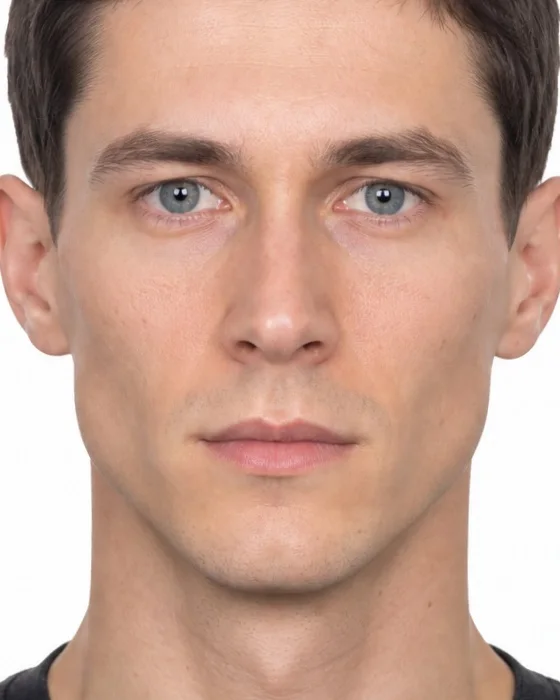 Before
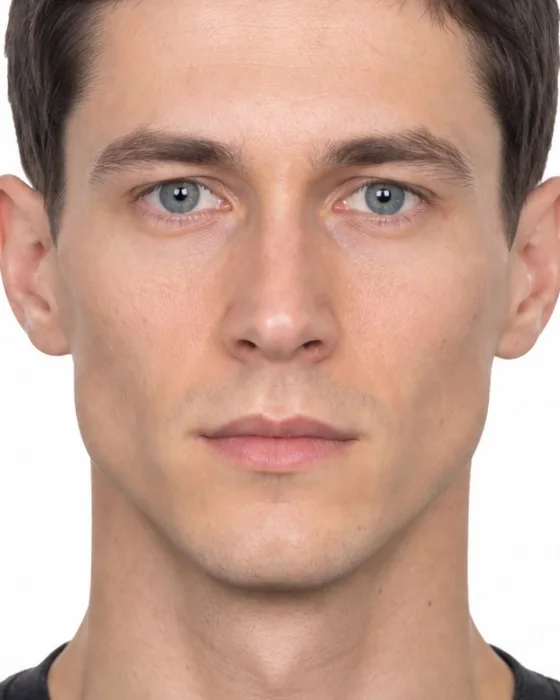 After
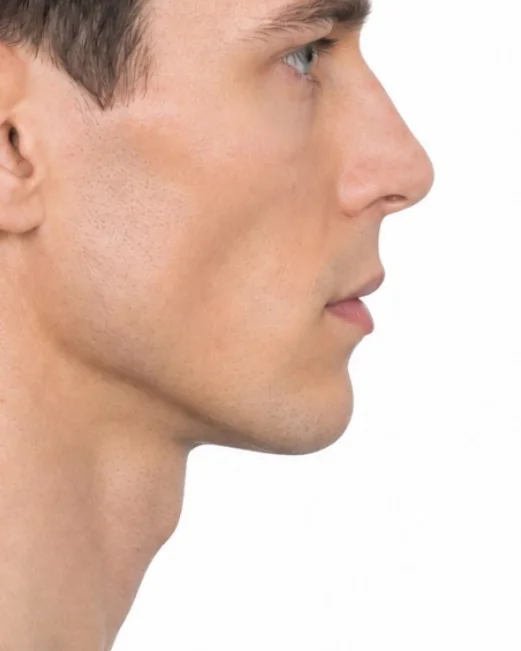 Before
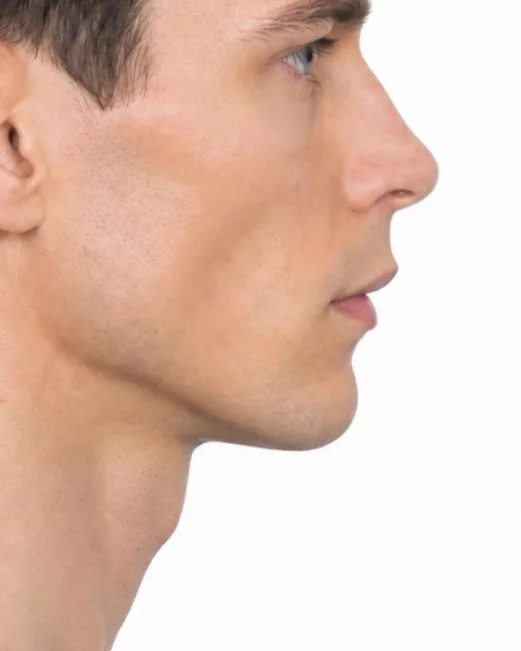 After
Made with Cephra’s own simulation on the reference face from the measurement guides, at the example strength the app starts this procedure with. Moves the upper jaw forward and up and adjusts its pitch; upper lip and nasal base follow, and the lower jaw rotates up with it, so the lower face gets shorter. It is an illustration of the shape change, not a prediction of anyone’s result. Movements without a measured treatment effect only illustrate the shape.
Measurements it changes
Measured by the app on the same reference face, before and after the example above.
| Measurement | Before | After | Change |
|---|---|---|---|
| Chin-to-Philtrum RatioFront view | 2.219 | 2.313 | +0.094 |
| Facial Convexity (Nasion)Side view | 161.3° | 156.2° | -5.1° |
| Frankfort–Nasal Tip AngleSide view | 36.9° | 41.5° | +4.6° |
| Upper Lip InclinationSide view | -1.0° | 3.5° | +4.5° |
| Facial Convexity (Glabella)Side view | 165.7° | 161.4° | -4.3° |
| Z AngleSide view | 72.5° | 68.6° | -3.9° |
| Nasal Underside Rotation AngleSide view | 17.7° | 20.8° | +3.1° |
| Facial Width-to-Midface Height RatioFront view | 1.725 | 1.753 | +0.028 |
| Interior Midface Projection AngleSide view | 67.6° | 64.9° | -2.7° |
| Anterior Facial Depth AngleSide view | 70.4° | 67.9° | -2.5° |
| Upper Lip E-Line PositionSide view | -3.6 mm | -1.2 mm | +2.4 mm |
| Nasomental AngleSide view | 131.2° | 128.9° | -2.3° |
| Measurement | Before | After | Change |
|---|---|---|---|
| Upper Lip E-Line Distance / Nasal LengthSide view | -0.086 | -0.029 | +0.057 |
| Lower-to-Upper Vermilion Height RatioFront view | 1.465 | 1.480 | +0.015 |
| Gonial AngleSide view | 119.8° | 118.4° | -1.4° |
| Nasofrontal AngleSide view | 135.9° | 135.0° | -0.9° |
| Nasal Dorsal CurvatureSide view | -3.3 % | -4.1 % | -0.8 % |
| Lower Lip E-Line Distance / Nasal LengthSide view | -0.038 | -0.044 | -0.006 |
31 smaller changes are not listed. “Move along” means the value changes because a neighbouring point or the line it is measured against moves, not because the feature itself is treated. Values belong to the reference face and the example strength; on another face, or at another strength, the same procedure moves them by other amounts. A measurement describes a photo and is neither good nor bad on its own.
What it is
The upper jaw is cut horizontally above the tooth roots, moved forward, backward, up, down or rotated, and fixed with small titanium plates and screws. Access is through an incision in the gum above the upper teeth under general anaesthesia, usually with orthodontic treatment before and after.
Recovery and how long it lasts
Usually 1–2 nights in hospital; swelling peaks at about 48 hours and often lasts 3–4 weeks; most people take about 3 weeks off work, and bone healing continues over several months.
How long it lasts: Permanent bony change; small relapse of position is possible.
Main risks
- Numbness of the upper lip, cheeks, gums or palate (usually temporary; most recover within months)
- Changes to the nose, such as a wider base or upturned tip, plus nosebleeds and a blocked nose early on
- Relapse of jaw position or a deviated nasal septum (uncommon)
- Infection of plates needing removal (uncommon)
- Rarely severe bleeding, tooth damage or loss of bone blood supply
The main risks named in the sources below, not a complete list. A surgeon or doctor explains the risks that apply to you.
Limits of the preview
- The example is shown in the front view and the side view. It moves the photo’s shape only: swelling, scars, skin quality and how tissue settles over months are not part of the picture.
Published prices
Published examples range from €3,455 to €11,417 (2 published examples). These are prices that providers publish themselves, not a market average and not a quote.
- Gangwhoo Cosmetic Hospital · published pricesVietnam · €3,455 · original 3,960 USD · checked 22 September 2026
Le Fort I upper-jaw osteotomy. Regular published procedure price, not the separately advertised promotional price. The price line does not establish inclusion of anesthesia, hospital stay, orthodontics, travel or other fees; confirm a full quote. EUR amounts are rounded to whole euros using the ECB reference rate dated 2026-09-22; payment exchange rates and fees may differ.
- KAI Clinic Tokyo · published pricesJapan · €11,417 · original 2,057,000 JPY · checked 22 September 2026
Le Fort I maxillary osteotomy. Published procedure fee. General anesthesia and examinations appear as separate price-list items and are not assumed included. Orthodontics, travel and final inclusions require a separate quote. EUR amounts are rounded to whole euros using the ECB reference rate dated 2026-09-22; payment exchange rates and fees may differ.
Research
- Numbness and recovery after jaw surgery in 579 casesCureus · 2026 · cohort study · Moderate evidence
Cheek-area numbness occurred in 16.0% after Le Fort I and lower-lip numbness in 31.6 to 39.3% of sides after lower-jaw splits; recovery at 6 months was 94.4% and 92.9%; advancing the lower jaw 5 mm or more raised the risk.
- Moving the upper jaw back did not shrink the nasal airwayJ Craniofac Surg · 2024 · cohort study · Moderate evidence
Nasopharyngeal airway volume did not change significantly in either group, and the two techniques did not differ.
- Where should the upper jaw sit for the most attractive profile?Br J Oral Maxillofac Surg · 2023 · cross-sectional study · Moderate evidence
The group with the incisor 0 to 4 mm ahead of the line got 61.8% positive ratings, while the most retruded group got 71.8% negative ratings; scores correlated with incisor position (r = 0.68). Rater agreement was moderate.
- Which face changes after double-jaw surgery relate to patient satisfactionJ Craniofac Surg · 2020 · cohort study · Moderate evidence
Improvements in facial appearance and chewing were highly significant. A longer upper lip and a lower nose tip projection-to-height index correlated with greater perceived aesthetic improvement.
- Low-level laser and mouth opening after jaw surgeryLasers Med Sci · 2018 · controlled study · Moderate evidence
Laser did not change mouth opening after surgically assisted palate expansion or single-jaw surgery. After two-jaw surgery, mouth opening was greater in all laser-treated patients and significantly so in men.
9 studies in the research library are linked to this procedure; the strongest are shown.
Sources
- Cambridge University Hospitals NHS – Maxillary (upper jaw) osteotomy
- Narita et al. 2026, Cureus – Neurosensory disturbances after orthognathic surgery (579 cases), PMC
- Cleveland Clinic – Jaw Surgery (Orthognathic)
Patient information checked 1 October 2026. Figures vary between people and sources. This page is general information, not medical advice.
Measure your face – freeMeasured in your browser; your photos stay on your device. The simulation that shows a procedure on your own photo is part of the paid plans.